Δευτέρα 10 Μαΐου 2010

Tomorrow - Tomorrow (Very Good British Psychedelia 1968)

In the early days of British psychedelia, three bands were consistently cited as first-generation figureheads of the London-based underground sound: Pink Floyd, the Soft Machine, and Tomorrow. Pink Floyd became superstars and the Soft Machine influential cult legends, but Tomorrow is mostly remembered (if at all) for featuring Steve Howe as their lead guitarist in his pre-Yes days.

Actually, Tomorrow was nearly the equal of the two more celebrated outfits. Along with the early Floyd and Soft Machine, they shared a propensity for flower-power whimsy. Though they were less recklessly innovative and imaginative, their songwriting was accomplished, with adroit harmonies, psychedelic guitar work, and adventurous structures and tempo changes. They never succumbed to mindless indulgence or jamming; indeed, their tracks were rather short and tightly woven in comparison with most psychedelic bands.

A couple singles (especially "My White Bicycle") were underground favorites, but the group only managed to record one album before breaking up in 1968. Lead singer Keith West, even before the breakup, had a number two British hit with "Excerpt From a Teenage Opera," which helped inspire Pete Townshend's Tommy. Drummer Twink joined the Pretty Things and, later, the Pink Fairies.

01. My White Bicycle
02. Colonel Brown
03. Real Life Permanent Dream
04. Shy Boy
05. Revolution
06. The Incredible Journey Of Timothy Chase
07. Auntie Mary's Dress Shop
08. Strawberry Fields Forever
09. Three Jolly Little Dwarfs
10. Now Your Time Has Come
11. Hallucinations
12. Claramount Lake
13. Real Life Permanent Dream (Alternate Version)
14. Why
15. Revolution (Phased Mono Version)
16. Now Your Time Has Gone (Mono)
17. 10,000 Words In A Cardboard Box - Aquarian Age
18. Good Wizzard Meets Naughty Wizzard - Aquarian Age
19. Me - ZION DE GALLIER
20. On A Saturday - Keith West
21. The Kid Was A Killer - Keith West
22. She - Keith West
23. The Visit - Keith West

Post by ChrisGoesRock

Pavlov's Dog - Pampered Menial (All Time Classic Album 1974)

Pampered Menial was the first album from Pavlov's Dog, a band produced by Murray Krugman and Sandy Pearlman, the duo behind Blue Oyster Cult. The seven men in this group are revealed in the gatefold holding "Horace," a dog, while three engravings from 1849 by artist Robert Vernon make up the front, back and inside cover. Those paintings are striking, and though the music, mostly written by vocalist David Surkamp, tries hard, it just isn't as captivating as the package which surrounds it. Surkamp sounds like a chick singer, something that wasn't quite in vogue yet -- Journey and the Mickey Thomas Starship wouldn't happen for another four years, not until 1979, and even Thomas' hit with the Elvin Bishop Group was a year away, male vocalists were singing in lower registers at this point. With song titles like "Theme From Subway Sue" and "Of Once And Future Kings" the identity that a Blue Oyster Cult maintained was missing here. "Subway Sue" sounding very much like the 80s version of Mott, the band after Ian Hunter took his leave. If you thought Mott's high pitched vocals were out of place and annoying, check out Surkamp's strange warbling. The band itself isn't half bad. "Episode's mellotron, courtesy of Doug Rayburn and Siegfried Carver's violin, provide more than adequate sounds. Carver's sole composition, "Preludin," comes off as one of the best tracks, perhaps because it is an instrumental version of progressive rock that Triumvirat and early Journey were exploring, But when David Surkamp's vocals kick in again on the next tune, like Pavlov's experiments, it makes the listener want to break things, including this record. "Julia" is a mediocre lyric and ok melody, just destroyed by the vocalist who composed it. If this were an instrumental group, the music would be much easier to take. The band provides elegant rock, majestic drums by Mike Safron, additional keyboards by David Hamilton augmenting Rayburn's mellotron and flute, and solid 70s production from Krugman and Pearlman. Lead guitarist Steve Scorfina co-writes a beautiful piece with vocalist Surkamp in "Late November," but its perfection is marred by the whining sounds of the frontman. It is really sad, as there seems to be much potential here, drummer Michael Safron's "Song Dance" another highly creative number. A & R man Mark Spector had some kind of ears, what he was thinking here is anyone's guess. The solid riffs, the wonderful blend of sounds, all destroyed by David Surkamp's forced vocals which sound like some experiment by Pavlov gone awry. The Mott band from Shouting & Pointing infamy should have been put on a stage with Pavlov's Dog to see which act could clear the room first. "Fast Gun" is another solid progressive tune, but without the polish of a Brad Delp or Steve Perry, it just didn't stand a chance. Columbia Records should re-issue an instrumental version of this disc via their Legacy series, the music deserves it.

AMG Review by Joe Viglione

Κυριακή 9 Μαΐου 2010

Shriekback - Big Night Music (Great Indie Rock 1986)

Big Night Music continued Shriekback's evolution from fringe weirdoes to unlikely pop stars. It was more accessible than anything they'd done before, and not by accident -- a conscious intent to reach for a wider audience is apparent even in the album's packaging, which pictures the band members on the cover for the first time, includes a long note from Shriekback to their fans, and gives credits for make-up, hair, and denim. The lush, organic production (by Gavin MacKillop) is a long, long way from the clattering psycho-funk of Tench, and Shriekback's distinctive drum programs have been entirely replaced by Martyn Barker's drums. ("Big Night Music is entirely free of drum machines," say the liner notes. "Shriekback have chosen to make a different kind of music -- one which exalts human frailty and the harmonious mess of nature over the simplistic reductions of our crude computers.") All this makes it tempting to dismiss this album, but that would be a mistake -- taken on its own terms, it's a vastly successful record. Its ten tracks explore a variety of new styles and the results include some of their best songs: "The Shining Path," an evocative moonlight serenade; "The Reptiles and I," with glassine synths echoing over a sinewy rhythm section; and "Sticky Jazz," which is funky in a joyful, floppy way and marks quite a change for the often sinister Shrieks. Barry Andrews, who handles all lead vocals for the first time, is not a great singer, but he manages; Barker shows impressive rhythmic versatility; and Dave Allen continues to be the band's anchor, providing dependable brilliance on the low end. Big Night Music accomplished everything it set out to do, finding success with both record buyers and critics, but was quickly followed by Allen's departure from the band.

AMG Review by Bill Cassel

Pearls Before Swine - Balaklava (Superb Folk-Psychedelia 1968)

A record that virtually defies categorization, Pearls Before Swine's 1968 epic Balaklava is the near-brilliant follow-up to One Nation Underground. Intended as a defiant condemnation of the Vietnam War, it doesn't offer anthemic, fist-pounding protest songs. Instead, Rapp vented his anger through surrealist poetry, irony, and historical reference: Balaklava was the 1854 Crimean War battle that inspired Alfred, Lord Tennyson to write his epic The Charge of the Light Brigade; in reality, the "Charge" was a senseless military action that killed scores of British soldiers. Balaklava begins with "Trumpeter Landfrey," an 1880's recording of the actual voice and bugle charge of the man who sounded the charge at Balaklava. It makes the transition into "Translucent Carriages," a mix of acoustic guitars, a basic vocal, and ghostly narration ("Jesus raised the dead...but who will raise the living?"), all the more stunning. "Images of April" continues the mystical feel, combining flutes, cricket chirps, and frog croaks for a nether-worldly effect. Rapp virtually cries "I Saw the World," backed by a powerful string arrangement that makes the song even more impassioned. Like One Nation Underground, Balaklava is somewhat unfocused: "There Was a Man" is a little too Dylan-esque, and Leonard Cohen's "Suzanne" detracts from Rapp's compositions. Unfortunately, the record closes with "Ring Thing," a morbid piece that refers to Tolkien's famous Lord of the Rings trilogy. Still, this is superb psychedelic music, successfully merging exotic instruments like marimba, clavinet, French horn, and swinehorn with Rapp's unique lisping vocals. But Balaklava isn't just acid-trip background music. It's probably the best example of what Rapp calls "constructive melancholy" (also the name of a recent CD collection of Pearls songs), a combination of the real with the surreal, and it's indispensable to any serious '60s rock collection.

AMG Review by Peter Kurtz

Molly Hatchet - Beatin' the Odds (Good Hard Rock 1980)

With a change of lead vocalist (Danny Joe Brown replaced by Jimmy Farrar), Molly Hatchet seems to lose a bit of its fire, although "Beatin' the Odds" went on to make a favorable showing on classic rock radio. With only a couple of standout tracks, notably the title track and "Penthouse Pauper," the sound that the band had worked so hard to attain seems to have undergone more obvious changes than just the swapping of a lead singer. Still, a handful of high points here are sure to please the die-hard Molly Hatchet fan.

AMG Review by Michael B. Smith

Pussy - Pussy Plays (1969 UK Psych)

The unfortunately named Pussy released one self-titled album on the small London label Morgan Blue Town in 1969. Morgan Blue Town had a habit of printing its albums in meagre quantities (and in the case of Chimera recording 20 tracks worth of material and then forgetting to release any of it) and as such much of the back catalogue has become very saught after.

Due to its scarcity the original Pussy Plays LP can command large three figure sums from record dealers, being regarded by many as a lost classic of the UK psych scene.


Pussy were previously known as Fortes Mentum, a band who released a string of fine psychedelic singles on Parlaophone. Apart from that, any more biographical information of the band is practically non-existent. On the record itself Danny Beckerman gets named as contributing the majority of the tracks on the LP.

From the fact that the front cover bears a picture of an enormous orange cat and that both the album begins and ends with the sound of said cat screeching, one can ready tell that this is an album not to be taken too seriously. It smacks of the same whimsy that makes British psychedelia so appealing.


ìWe built the Sunî is a marvellous bit of wide-eyed hippy nonsense, with the vocalist proclaiming in hushed tones that ìI am Mr Sun and Mr Snowî over the backing of a single repetitive guitar line and complimentary swells of organ. Sadly the naive chorus lets the track down, with the backing vocals tending to go a bit flat.

ìThe Open Groundî is also apt to raise a smile, being as it is a spoken word piece on the destruction of the environment. Unfortunately any gravitas which the doom-laden poetry may have contained is lost in the vocalistís middle-class diction.

There are some true highlights on this album. ìCome Back Juneî starts with a killer bass-line before crashing into a stone-wall sixties groove. Heavy Hammond organ and a competent bit of guitar work make this an infectious piece of psychedelic pop. Similarly ìAll of My Lifeî is more of the same but decidedly laid back groove, with the band sounding reminiscent of the 13th Floor Elevators.

And as with most albums of this era and nature there are couple of brilliant loose jams. The first of these is ìCometî; lead on its way by a raging Theremin, ably backed up by frenetic guitars, organ and ungodly slowed-down vocals. The other is the final track, ìG.E.A.Bî, and is a prime slice of funky psych rock which builds steadily over a heavy break beat and organ stabs. Meandering guitar solos bring the album to a clattering close.

On the value of their one record Pussy do not seem to warrant their mythical status or hefty price tag. Nevertheless their sole album has its moments, and stands as a piece that bridges the gap between psychedelia and the progressive rock scene.

01. Come Back June
02. All of My Life
03. We Built the Sun
04. Comets
05. Tragedy in F Minor
06. Open Ground
07. Everybody's Song
08. G.E.A.B.

Post by ChrisGoesRock

Σάββατο 8 Μαΐου 2010

Stack - Above All (1966 Garage-Psychedelia from California)

A local Californian release and one of the rarest and probably the most significant American private press hard rock album of the era. Stack was 'discovered' in the mid-eighties and since then only a half-dozen original copies have ever turned up. Above All is a heavy blaster with echoes of U.K. freakbeat / psych creeping around in the shadows - Stack had an unusually super-distorted guitar sound, the result of using special custom made amps from a private factory in Los Angeles called Quilter. There's also one cover version - a wild garage R&B of Leiber and Stoller's Poison Ivy, and the remaining tracks are sixties style hard rock.

Stack were a figurehead group in a busy hard rock scene exploding out of the Los Angeles area in the late sixties. Formed out a surf act called The Vandells and another local act called Wabash Spencer, they went on to gig with such notables as Buffalo Springfield, Three Dog Night, Iron Butterfly, Illinois Speed Press and Frank Zappa. They were also often supported by Alice Cooper! However, fame and fortune eluded the band, not for lack of talent but because of a 'bum' deal from their record company. Signed for an eight year contract they were subsequently written off as a tax-loss, which left them contractually bound, no money and nowhere to go but obscurity.

Thankfully, the Void and Gear Fab reissues have made the album available to a wider audience for the first time, which should help Stack gain the attention they justly deserved. The Gear Fab CD also comes with extensive liner notes.

01. Poison Ivy
02. Only Forever
03. D.A. Blues
04. Cars
05. Everyday
06. Valleys
07. Time Seller
08. Hot Days
09. Do It (Bonus)

Post by ChrisGoesRock

Skip Bifferty - Skip Bifferty + bonus tracks (1968 British Psychedelia)

Skip Bifferty were a rock band formed in early 1966, when The Chosen Few from Newcastle upon Tyne changed their band name when got a new singer, Graham Bell. Their outings on vinyl were few and far between, but they had a following on the "live" circuit and are remembered with great affection. Their manager was Don Arden. The origins of Skip Bifferty can be traced back to the mid-60s and the North of England's Newcastle beat scene. The Chosen Few were one of the leading unsigned bands and featured founder members Alan Hull (guitar/vocals, later in Lindisfarne) and Mickey Gallagher (keyboards). Both had played together in local outfits previously, starting with The High Five in 1962. Gallagher was playing in another local group, The Unknowns when Alan Price announced his departure from The Animals. Mickey Gallagher was drafted into the famous Geordie outfit for a short tour of Scandinavia and the UK, playing keyboards for Eric and the boys.

On his return to Newcastle, Gallagher and drummer Alan Jackman from The Unknowns recruited old pal Alan Hull and singer Rod Hood together with bassist Alan "Bumper" Brown to form The Chosen Few. They rehearsed at the Key Club in Newcastle, which was owned by their manager, Bill Keith, who managed to get them a 15-minute slot on Radio Luxemburg performing live, and, from that broadcast, the group was signed to Pye Records.

By the Summer of 1966, with a year of successful gigs and two singles under their belts, the band lost Alan Hull and "Bumper" Brown, but found replacements in Colin Gibson (bass) and John Turnbull (guitar). The young duo had been friends since the age of five, and were both former members of The Primitive Sect, a group which also featured Bob Sergeant on organ (later in Junco Partners).

A few months later, Graham Bell returned to his home town of Newcastle after his group, The Graham Bell Trend, had broken up due to lack of interest down south. Bell had met up with Mickey Gallagher during his stint in The Animals, and The Chosen Few offered him the vocalist spot. Although he'd released one 45 on Polydor, which was in an MOR direction, he saw The Chosen Few as where it was happening.

The group secured some London gigs, and it was during a particularly scorching set at the Marquee that Don Arden approached them with an offer that they couldn't refuse: "In 9 months you'll be as big as the Stones", he said.

With that, the band signed, and Arden immediately put them up in a house in Beckenham to "get it together", which they did, pouring out new songs with intricate arrangements that showcased their many talents. To further highlight their artistic talents, they also painted the lawn red!

Arden secured a deal with RCA in the Summer of 1967, and the first fruits of that deal was the bands' first 45, "On Love"/"Cover Girl". The A-side featured a blistering killer fuzz guitar riff underpinning Graham Bell's superb soulful Spencer Davis-like vocals. The pirates, Radio Caroline and Radio London, loved it and gave it heavy rotation, but due to the BBC's playlist policy at that time, the latter failed to pick up on a classic single. The track was later recorded as "Our Love" by The Sons Of Man on their hideously rare "Oak" EP from the same year. Meanwhile, work flooded in, including appearing in the cult 60s film "Smashing Time", featuring Rita Tushingham. Sadly, their music doesn't appear on the LP soundtrack.

A follow-up single was required, and with more than a little influence from Don Arden, the band wrote the flower-power pop ballad, "Happy Land", which was recorded at Decca's West Hampstead studios during the first session for a projected album.

The band began to do regular sessions on John Peel's "Perfumed Garden" and became firm underground favourites. "Happy Land"/"Reason to Live", their second 45, was issued in the late Autumn of 1967. Sadly, it, too, failed to ignite record buyers' interest, and RCA sat on their album.

Chris Welch, staff writer at Melody Maker, discovered the group around this time and began to write about them. They played gigs and worked hard, gaining a respectable following over the country. A third and final RCA 45, "Man in Black"/"Money Man", was issued in July 1968, arranged and produced by Small Faces duo Steve Marriott and Ronnie Lane (both of whom were also on Arden's books).

The label were certainly unsure of how to market the band, as a promo 45 with "Money Man" as the A-side was pressed up in limited quantities just prior to its release, before the sides were flipped! This early version is markedly different and raw-sounding. "Man in Black" was eventually pressed as the A-side with the finished studio LP version of "Money Man" on the B-side. The 45 certainly showed a return to form for the band, however, the single only sold at underground level.

With further recordings made, RCA finally issued their debut, self-titled LP, complete with sleevenotes by John Peel. Unfortunately, many of the credits were wrong, and mono pressings had stereo labels and vice-versa. To cap it all, the band were unhappy with the sound of the LP! Under pressure, the record company had the LP re-cut, and it was re-launched a month later with a better sound and with orange RCA labels (the original pressing had black labels)

For underground psych fans, this LP was a major release, and Chris Welch in Melody Maker gave it a rave review. The LP showed the band to be experimenting with different sounds, effects, tape loops, phasing, while still retaining a classic pop music sound.

The band half-heartedly began working on a follow-up LP, called "Skiptomania". Colin Gibson even completed artwork for the album, but the label decided not to extend their contract. To make matters worse, the band's relationship with Don Arden was now strained to say the least, mainly due to him not grasping the reality of the late 60s music scene. He was still treating them like a beat group whose very existence relied on their hits.

In order to shake off their restrictive management deal with Arden, the band made a shock announcement in the music press that they were disbanding in November 1968. In actual fact, the whole band nipped off to the Isle of Wight, where they rented a cottage, rehearsing and writing new material. Mickey Gallagher made several trips back to London in an effort to secure a new record deal and attracted the attention of Chris Blackwell of Island Records.

A publicity scam was cooked up, and 'Time Out" magazine ran an advertisement for a mystery group called Heavy Jelly. The result was the longest 45 released at that time.

"I Keep Singing That Same Old Song"/"Blue", written by bassist Colin Gibson, was released in June 1969. Apart from the length of the song, it was also issued in a picture sleeve - unheard of for Brit 45s then.

There was a lot of guesswork as to their identity, with people citing Spooky Tooth as the culprits, but "Time Out" magazine gave the biggest clue of all when they stated that the single "really skips and biffs along"! The 45 became a hit all over Europe and was included on the Island sampler, "Good Enough to Eat".

As an aside, it's worth mentioning two other enterprising companies who also got in on the act using the moniker Heavy Jelly. One was Head Records, who put together a group, later to back Jackie Lomax, and recorded a whole LP. They also released a 45, and test pressings of their LP turned up in the early 70s, later to be reissued by the Psycho label in 1984. The other outfit was created Simon Napier-Bell and only got to be issued in the States. In any case, Don Arden, worked out the identity of the real Heavy Jelly, and Chris Blackwell, not wanting any conflict, backed out of working with Skip Bifferty. The band, meanwhile, by this time with new drummer Fred Wheatley, were without a record deal, returned to Newcastle and split.

Band members quickly moved onto other projects; Graham Bell and Colin Gibson were soon to form Griffin in 1969 where they issued a 45 on Bell. Meanwhile, Mickey Gallagher and John Turnbull formed Arc in early 1970 where they signed to Decca issuing an LP in 1970 and recording tracks for the film soundtrack to "Extremes", issued in 1972 on Deram. With Graham Bell joining them in 1972, they became Bell & Arc and signed to Charisma where a further LP was released in 1972.

Gallagher & Turnbull continued working together, and in 1976 with a name change to Loving Awareness, with Charlie Charles (drums) and Norman Watt-Roy (bass, ex-Greatest Show On Earth), in total antithesis to the emerging punk scene, they attempted to re-capture the sound of the 60s, where they even recorded a version of Skip Bifferty's "Guru". However, the LP failed to sell, but, in any case, the band achieved success in the late 70s backing Ian Dury with a name change to The Blockheads.

Colin Gibson worked with various groups in the early 70s after Griffin and eventually teamed up with Mark Almond for a US tour and an LP on Harvest. In July 1973, he teamed up with ex-Procol Harum/ Freedom drummer Bobby Harrison (vocals/percussion), ex-Tramline members Mick Moody (guitar) and Terry Popple (drums) and with Pete Solley (organ) to form the heavy rock outfit Snafu where they recorded two albums for WWA and one for Capitol during 1973-75. Colin later joined late 70s outfit Radiator and worked again with Alan Hull on Alan's solo LP. Up until the present day, he is still working in blues bands.

01. Money Man
02. Jeremy Carabine
03. When She Comes To Stay
04. Guru
05. Come Around
06. Time Track
07. Gas Board Under Dog
08. Inside The Secret
09. Orange Lace
10. Planting Bad Seeds
11. Yours For At Least 24
12. Follow The Path Of The Stars
13. Prince Germany The First
14. Clearway 51
15. On Love
16. Cover Girl
17. Happy Land
18. Reason To Live
19. Man In Black
20. Round And Round
21. This We Shall Explore
22. Schizoid Revolution

Post by ChrisGoesRock

Six Feet Under - In Retrospect 1969-1970 (Garage Psychedelia)

Jerry Dobb and Scott Julian formed the Marc 5 in 1966 in Colonia, New Jersey. Later known as the Sonix, they decided to change musical direction in 1968 and new personnel were secured to form Six Feet Under. The first drummer didn't last long, his seat being taken by Hector Torres. By 1970, seeking a recording contract, another shake-up resulted in the exit of Torres and the acquisition of a young female vocalist to strengthen that department.

The CD retrospective comprises nineteen tracks - eight studio, five home recordings plus live and radio spots. It showcases the width of the bands hippie-acid-psych repertoire, sounding like Ill Wind one minute and Iron Butterfly the next. An excellent and welcome release with a fascinating history and track-by-track breakdown from Jerry Dobbs. And as Jerry points out, ironically it was only ousted drummer Torres who found real success and fame. After returning home to Sayerville, he'd bounce back after teaming up with a promising youngster called Jon Bon Jovi...

Six Feet Under Theme, an unreleased '68 effort, resurfaced on 30 Seconds Before The Calico Wall (CD) and their unreleased cover of Iron Butterfly's In-A-Gadda-Da-Vida on Beyond The Calico Wall (CD). Their first 45 occupies similar territory - heavy acid-rock with hippie undertones.

01. Inspiration in My Head
02. Freedom Listen Listen
03. What Would You Do?
04. Baby I Want to Love You
05. In Retrospect
06. Fields
07. Running Around in the Sun [Reference Mix]
08. Black Movies[Instrumental]
09. Six Feet Under Theme
10. Suzy Q
11. City Blues
12. In-A-Gadda-Da-Vida
13. Basement Jam
14. Sonix Commercial
15. Inspiration in My Head [Alternate Take][Instrumental]
16. Freedom [Live]
17. What Would You Do?
18. Fields [45 Version]
19. Boogie Man Bash

Post by ChrisGoesRock

Πέμπτη 6 Μαΐου 2010

Sparks - Kimono My House (Glam-Rock 1974)

Arguably one of Sparks' best albums, 1974's Kimono My House finds the brothers Mael (Ron wrote most the songs and played keyboards, while Russell was the singing frontman) ingeniously playing their guitar- and keyboard-heavy pop mix on 12 consistently fine tracks. Adding a touch of bubblegum, and even some of Zappa's own song-centric experimentalism to the menu, the Maels spruce up a sleazy Sunset Strip with a bevy of Broadway-worthy performances here: as the band expertly revs up the glam rock-meets-Andrew Lloyd Webber backdrops, Russell sends things into space with his operatic vocals and ever-clever lyrics. And besides two of their breakthrough hits (the English chart-toppers "This Town Ain't Big Enough for Both of Us" and "Amateur Hour"), the album features one of their often-overlooked stunners, "Here in Heaven." Essential.

AMG Review by Stephen Cook

Blue Cheer - Vincebus Eruptum (Great Acid Psychedelia 1968)

Vincebus Eruptum is the debut album of proto-metal/psychedelic band Blue Cheer, released in January 1968. The album is widely considered to be the best Blue Cheer album[1], although this title sometimes goes to their second album, Outsideinside.

Vincebus Eruptum peaked at #11 on Billboard's Pop Albums chart in North America, while the single, a cover of Eddie Cochran's "Summertime Blues," peaked at #14 on the Pop Singles chart.

Blue Cheer is a San Francisco-based rock group of the late 1960s and early 1970s, who helped to pioneer heavy metal music. According to Tim Hills in his book, The Many Lives of the Crystal Ballroom, "Blue Cheer was the epitome of San Francisco psychedelia. The band was rumored to have been named for a brand of LSD and promoted by renowned LSD chemist and former Grateful Dead patron, Owsley Stanley. Another rumor is that the Blue Cheer was a blend of heroin and methamphetamine with just a pinch of arsenic "for an extra glowly feeling", taken intravenously. A "blue cheer" is also obscure and somewhat archaic British slang for a fart.

The band's sound, however, was something of a departure from the music that had been coming out of the Bay Area: Blue Cheer's three musicians played heavy blues-rock, and played it very loud.

Original personnel were singer/bassist Dickie Peterson, guitarist Leigh Stephens, and drummer Paul Whaley. Their first hit was a cover version of Eddie Cochran's "Summertime Blues" from their debut album Vincebus Eruptum (1968). The single peaked at #14 on the Billboard Hot 100 chart, their only such hit, and the album peaked at #11 on the Billboard 200 chart.

The group's sound was hard to categorise, but was definitely blues-based, psychedelic, and loud. The group underwent several personnel changes after the 1968 release of Outsideinside, and then yet more changes during and after 1969's New! Improved! Blue Cheer (different guitarists on side 1 and 2). After Leigh Stephens was replaced by Randy Holden, formerly of Los Angeles garage rock band The Other Half, in 1968, Blue Cheer's style changed to a more commercial hard rock sound ‡ la Steppenwolf or Iron Butterfly. For the fourth album Blue Cheer, Holden, who had left during the third album, was subsequently replaced by Bruce Stephens. Stephens later quit and was replaced by Gary Lee Yoder, who helped complete the album.

The new line up of Peterson, Ralph Burn Kellogg, Norman Mayell, and Yoder in 1970 saw the release of The Original Human Being and then 1971's Oh! Pleasant Hope. When Oh! Pleasant Hope failed to dent the sales charts, Blue Cheer temporarily split up.

01. "Summertime Blues" (Capehart/Cochran) - 3:47
02. "Rock Me Baby" (Josea/King) - 4:22
03. "Doctor Please" (Peterson) - 7:53
04. "Out of Focus" (Peterson) - 3:58
05. "Parchment Farm" (Allison) - 5:49
06. "Second Time Around" (Peterson) - 6:17

Post by ChrisGoesRock

American Blues - Is Here (1967 Blues-Rock)

Ok, peoeple's music philosophies vary so I will try to give info that is relative mainly to music collectors/60's 70's rock fans. This a hard psych album, rough around the edges w/ off the cuff touches of improvisation....yet concise enough not to get bored. The song "Melted Like Snow" is amazing. To me this album sounds like a combination of Elias Hulk, Seompi, and Fresh Blueberry Pancake (with the tonal qualities of Dusty Hill's voice). [Reviewer unknown]

Akarma CD reissue of the first album by this pre ZZ Top Texas psych band released in 1968. lt includes the infamous lunched out version of "If I Were A Carpenter" (from Endless Journey) as well as other gems such as "Melted Like Snow" Stunning rough edged acid blues psych with stoned guitar breaks and high volume mayhem that alternates with melodic, mellow trippyness. Essential stuff. Housed in a mini-gatefold LP sleeve.

01."If I Were A Carpenter"
02."All I Saw Was You"
03."She'll Be Mine"
04."Fugue For Lady Cheriff"
05."It's Gone"
06."Keep My Heart In A Rage"
07."Mercury Blues"
08."Melted Like Snow"
09."Mellow"

Post by ChrisGoesRock

10cc - Deceptive Bends (Classic Album 1977)

When Kevin Godley and Lol Creme left 10cc in 1976 to pursue a solo career, many thought it was the death knell for the group. However, Eric Stewart and Graham Gouldman kept the group alive as a duo (with the assistance of percussionist Paul Burgess) and turned in a surprisingly solid album with 1977's Deceptive Bends. It may lack the devil-may-care wackiness that popped up on previous 10cc albums, but it makes up for it by crafting a series of lush, catchy pop songs that are witty in their own right. Deceptive Bends also produced a pair of notable hits for the group: "Good Morning Judge" told the comical tale of a career criminal over a hook-laden, surprisingly funky pop backing while "The Things We Do for Love" was an irresistible Beatles pastiche that showcased 10cc's mastery of pop vocal harmonies. "People in Love," a surprisingly straightforward ballad built on a gorgeous string arrangement, also became a modest chart success. The remainder of the material doesn't stand out as sharply as these hits, but each of the tracks offers up plenty of naggingly catchy pop hooks, oodles of catchy riffs, and surprising twists in their arrangements. Highlights among the non-hit tracks include "Marriage Bureau Rendezvous," a satire of dating services set to a lilting soft rock melody, and "You've Got a Cold," a portrait of illness-influenced misery set to a percolating pop melody. The only place where Deceptive Bends slips is on "Feel the Benefit," the lengthy medley that closes the album. Its excessive length and hazy lyrics make it less satisfying than the album's shorter tunes, but it is kept afloat by a catchy, mock-Spanish midsection and some lovely string arrangements. All in all, Deceptive Bends is the finest achievement of 10cc's post-Godley and Creme lineup and well worth a spin for anyone who enjoyed Sheet Music or The Original Soundtrack.

AMG Review by Donald A. Guarisco

Procol Harum - Procol's Ninth (1975 Prog-Rock)

For their ninth album, Procol Harum turned to production by the veteran songwriting team of Leiber and Stoller, who had written the first single ("Poison Ivy") by Procol predecessor band, the Paramounts. Though the band is in top form (especially drummer B.J. Wilson) and despite a strong start (with the exquisite "Pandora's Box," a U.K. hit), the album largely runs out of steam by side two. Too much of the Brooker and Reid material is competent rather than exciting. Likewise, Procol fails to render memorable versions of two cover songs, Leiber and Stoller's "I Keep Forgetting" or the Beatles' "Eight Days A Week." Most of this album's best material can be found on the Chrysalis Years collection. [Grand Hotel and Procol's Ninth were later re-released as Cornerstone, a budget double album.]

AMG Review by James A. Gardner

Τετάρτη 5 Μαΐου 2010

Jethro Tull - Benefit (Very Good 1970 Art Rock)

Benefit was the album on which the Jethro Tull sound solidified around folk music, abandoning blues entirely. Beginning with the opening number, "With You There to Help Me," Anderson adopts his now-familiar, slightly mournful folksinger/sage persona, with a rather sardonic outlook on life and the world; his acoustic guitar carries the melody, joined by Martin Barre's electric instrument for the crescendos. This would be the model for much of the material on Aqualung and especially Thick as a Brick, although the acoustic/electric pairing would be executed more effectively on those albums. Here the acoustic and electric instruments are merged somewhat better than they were on Stand Up (on which it sometimes seemed like Barre's solos were being played in a wholly different venue), and as needed, the electric guitars carry the melodies better than on previous albums. Most of the songs on Benefit display pleasant, delectably folk-like melodies attached to downbeat, slightly gloomy, but dazzlingly complex lyrics, with Barre's guitar adding enough wattage to keep the hard rock listeners very interested. "To Cry You a Song," "Son," and "For Michael Collins, Jeffrey and Me" all defined Tull's future sound: Barre's amp cranked up to ten (especially on "Son"), coming in above Anderson's acoustic strumming, a few unexpected changes in tempo, and Anderson spouting lyrics filled with dense, seemingly profound imagery and statements. As on Stand Up, the group was still officially a quartet, with future member John Evan (whose John Evan Band had become the nucleus of Jethro Tull two years before) appearing as a guest on keyboards; his classical training proved essential to the expanding of the group's sound on the three albums to come. Benefit was reissued in a remastered edition with bonus tracks at the end of 2001, which greatly improved the clarity of the playing and the richness of the sound; the four additional tracks are "Singing All Day," "Witch's Promise," the elegant, gossamer-textured "Just Trying to Be," and the original UK mix of "Teacher." Written and recorded prior to Benefit, they're all lighter in mood than the material from the original album, adding some greater variety but fitting in perfectly on a stylistic level.

AMG Review by Bruce Eder

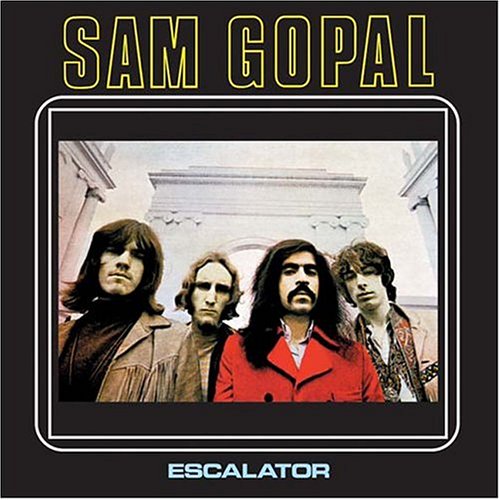
Sam Gopal - Escalator (1968 British Hard-Rock)

Late-period British psychedelia with snaky psychedelic-blues guitar lines, anguished vocals, a bit of an Eastern-folk bent to the melodies and a sheen of stoned mysticism to the lyrics. You have to be a very good group to pull this off well, and Sam Gopal were not very good; they were adequate, at best. Not terrible, but they definitely sound like a bill-filler, likely to be found as the opening band for much more interesting musicians in the U.K. in the late 1960s. The songs sound too similar to each other, but it is more low-key than you'd expect given Lemmy's later resume. Fave cut is "Midsummer Night's Dream," which puts the "You Really Got Me" riff to good use in a late '60s psych context (it sounds better than it reads). The CD reissue, taken from "original LP mixes," adds both sides of a non-LP single as bonus tracks.

AMG Review by Richie Unterberger

Green On Red - No Free Lunch (Alternative Rock 1985)

The critical hosannas lavished upon the album Gas Food Lodging earned Green on Red a major-label deal, though, with appropriate irony, this very American band found themselves contracted to the British branch of Polygram. The label's American imprint, Mercury, picked up their option several months after the group's big-label debut, No Free Lunch, was released in the U.K. An EP running a bit under 24 minutes (a later reissue padded it out to full length with a 13-minute blues workout on "Smokestack Lightning"), No Free Lunch covers territory not dissimilar to that on Gas Food Lodging; nomadic musicians on the road ("Keep on Moving" and the title cut), out-of-work sad sacks ("Honest Man"), families confronted with death and loss ("Jimmy Boy"), and the struggle to believe in something despite it all ("Time Ain't Nothing"). The band even throws in a pretty good cover of "Funny How Time Slips Away," and their performances are noticeably tighter and sharper than on their previous albums (the time on the road after Gas Food Lodging seems to have paid off), while the engineering by Steven Street and Simon Humphries is crisper and better detailed than the sometimes muddy tone of Gas Food Lodging. But while the band sounds game, the songs are good, and Dan Stuart is in unusually strong voice (with the exception of "The Ballad of Guy Fawkes," where he lapses into a curious fake Brit accent, perhaps in tribute to his new corporate sponsors), at only seven songs No Free Lunch seems oddly incomplete, sounding less like a self-contained short work than an album that somehow didn't get finished. There's nothing wrong with what's here, but it's hard not to wish the band had made more of it at the time.

AMG Review by Mark Deming

Τρίτη 4 Μαΐου 2010

New York Dolls - New York Dolls (1973 Proto-Punk)

The New York Dolls created punk rock before there was a term for it. Building on the Rolling Stones' dirty rock & roll, Mick Jagger's androgyny, girl group pop, the glam rock of David Bowie and T. Rex, and the Stooges' anarchic noise, the New York Dolls created a new form of hard rock that presaged both punk rock and heavy metal. Their drug-fueled, shambolic performances influenced a generation of musicians in New York and London, who all went on to form punk bands. And although they self-destructed quickly, the band's two albums remained two of the most popular cult records in rock & roll history.

All of the members of the New York Dolls played in New York bands before they formed in late 1971. Guitarists Johnny Thunders and Rick Rivets, bassist Arthur Kane, and drummer Billy Murcia were joined by vocalist David Johansen. Early in 1972, Rivets was replaced by Syl Sylvian and the group began playing regularly in lower Manhattan, particularly at the Mercer Arts Center. Within a few months, they had earned a dedicated cult following, but record companies were afraid of signing the band because of their cross-dressing and blatant vulgarity.

Late in 1972, the New York Dolls embarked on their first tour of England. During the tour, drummer Murcia died after mixing drugs and alcohol. He was replaced by Jerry Nolan. After Nolan joined the band, the Dolls finally secured a record contract with Mercury Records. Todd Rundgren ó whose sophisticated pop seemed at odds with the band's crash-and-burn rock & roll ó produced the band's eponymous debut, which appeared in the summer of 1973. The record received overwhelmingly positive reviews, but it didn't stir the interest of the general public; the album peaked at number 116 on the U.S. charts.

There are hints of girl group pop and more than a hint of the Rolling Stones, but The New York Dolls doesn't really sound like anything that came before it. It's hard rock with a self-conscious wit, a celebration of camp and kitsch that retains a menacing, malevolent edge. The New York Dolls play as if they can barely keep the music from falling apart and David Johansen sings and screams like a man possessed. The New York Dolls is a noisy, reckless album that rocks and rolls with a vengeance.

The Dolls rework old Chuck Berry and Stones riffs, playing them with a sloppy, violent glee. "Personality Crisis," "Looking for a Kiss," and "Trash" strut with confidence, while "Vietnamese Baby" and "Frankenstein" sound otherworldly, working the same frightening drone over and over again. The New York Dolls is the definitive proto-punk album, even more than anything the Stooges released. It plunders history while celebrating it, creating a sleazy urban mythology along the way.

01. Personality Crisis
02. Looking For A Kiss
03. Vietnamese Baby
04. Lonely Planet Boy
05. Frankenstein (Orig.)
06. Trash
07. Bad Girl
08. Subway Train
09. Pills
10. Private World
11. Jet Boy

Post by ChrisGoesRock

Cure - Pornography (1982 Goth Rock)

Later hailed as one of the key goth rock albums of the '80s and considered by many hardcore Cure fans to be the band's best album, Pornography was largely dismissed upon its 1982 release, witheringly reviewed as a leaden slab of whining and moping. The truth, as usual, is somewhere in between: Pornography is much better than most mainstream critics of the time thought, but in retrospect, it's not the masterpiece some fans have claimed it to be. The overall sound is thick and murky, but too muddy to be effectively atmospheric in the way that the more dynamic Disintegration managed a few years later. For every powerful track like the doomy opener "One Hundred Years" and the clattering, desolate single "The Hanging Garden," there's a sound-over-substance piece of filler like "The Figurehead," which sounds suitably bleak but doesn't have the musical or emotional heft this sort of music requires. Pornography is an often intriguing listen, but it's just a bit too uneven to be considered a classic.

AMG Review by Stewart Mason

New Race - The First and the Last (1981 Punk from Australia)

This album earned credibility for documenting a unique, one-off event. In 1981, ex-Radio Birdman bassist Warwick Gilbert, guitarist Deniz Tek, and vocalist Rob Younger saluted their influences by joining the Stooges' lead guitarist Ron Asheton and MC5 drummer Dennis Thompson for a six-week blitzkrieg of Australia. The notion made sense, since Radio Birdman had been acclaimed on their Australian home turf yet relegated to cult fodder elsewhere, while the MC5 and the Stooges had never been commercial propositions either. Still, once listeners pass the "punk summit" angle used in promoting the album, they'll find the fruits of this alliance impressive enough to warrant further exploration. Not surprisingly, there's strangled, slash-and-burn guitar playing aplenty on burners like "November 22, 1963," a conspiratorial recall of President John F. Kennedy's assassination. This track, by Asheton's major post-Stooges outlet, Destroy All Monsters, would undoubtedly win filmmaker Oliver Stone's approval. Tek's "Descent into the Maelstrom" and "Haunted Road" open similar forays into the fretboard jungle, while the Gilbert-Thompson axis never lets up, especially on the drummer's MC5 standard "Gotta Keep Movin'." As these choices show, the set draws evenly from across the board, with "Looking at You" and an understated "Loose" nodding again, respectively, to the MC5 and the Stooges. Tek's moodier songs, "Breaks My Heart" and "Sad TV," inject variety into the proceedings, while time constraints only permitted one new song to emerge: "Columbia," whose propulsive riff and atypical space-travel theme closes the album on a powerful, decisive note. Strategically overdubbed backing vocals and guitar on three songs, as well as piano on "Descent into the Maelstrom," do nothing to blunt this album's appeal, which offers historical value from a one-off event that never occurred again. Tek's terse yet engaging liner notes aptly sum up the exercise: "Humor beats bitterness every time." It's hard to disagree when the evidence is this powerful.

AMG Review by Ralph Heibutzki

David Bowie - Lodger (Classic Album 1979)

On the surface, Lodger is the most accessible of the three Berlin-era records David Bowie made with Brian Eno, simply because there are no instrumentals and there are a handful of concise pop songs. Nevertheless, Lodger is still gnarled and twisted avant pop; what makes it different is how it incorporates such experimental tendencies into genuine songs, something that Low and Heroes purposely avoided. "D.J.," "Look Back in Anger," and "Boys Keep Swinging" have strong melodic hooks that are subverted and strengthened by the layered, dissonant productions, while the remainder of the record is divided between similarly effective avant pop and ambient instrumentals. Lodger has an edgier, more minimalistic bent than its two predecessors, which makes it more accessible for rock fans, as well as giving it a more immediate, emotional impact. It might not stretch the boundaries of rock like Low and Heroes, but it arguably utilizes those ideas in a more effective fashion.

AG Review by Stephen Thomas Erlewine

Σάββατο 1 Μαΐου 2010

Ozric Tentacles - Jurassic Shift (1993 Space Rock)

The Ozrics are a truly curious bunch in that they have this unerring tendency and uncanny ability to make great scads of progressive and space music that has true heart. There are very few times when one can connect fabulous technical skill with such a strongly emotional core, and never mind the mystical triggers. Aside from this -- sort of typical marked praise -- there is the Ozric ability to blend ideas and styles, causing fairy-light synthesizer washes to turn into dub riddims, which then support jazz elements that fade away to another dose of the fairy-light synthesizer washes, except that this time they're riding on top of the dub. This is definitely music you can groove to, trance to, meditate to, or just be to.

AMG Review by Steven McDonald

Television - Marquee Moon (Superb Classic Album 1977)

Marquee Moon is a revolutionary album, but it's a subtle, understated revolution. Without question, it is a guitar rock album -- it's astonishing to hear the interplay between Tom Verlaine and Richard Lloyd -- but it is a guitar rock album unlike any other. Where their predecessors in the New York punk scene, most notably the Velvet Underground, had fused blues structures with avant-garde flourishes, Television completely strip away any sense of swing or groove, even when they are playing standard three-chord changes. Marquee Moon is comprised entirely of tense garage rockers that spiral into heady intellectual territory, which is achieved through the group's long, interweaving instrumental sections, not through Verlaine's words. That alone made Marquee Moon a trailblazing album -- it's impossible to imagine post-punk soundscapes without it. Of course, it wouldn't have had such an impact if Verlaine hadn't written an excellent set of songs that conveyed a fractured urban mythology unlike any of his contemporaries. From the nervy opener, "See No Evil," to the majestic title track, there is simply not a bad song on the entire record. And what has kept Marquee Moon fresh over the years is how Television flesh out Verlaine's poetry into sweeping sonic epics.

AMG Review by Stephen Thomas Erlewine

Nits - Omsk (1983 Dutch Indie Rock)

The parallels between the careers of XTC and the Nits are remarkable and too numerous to ignore. Both began their recording careers in the late '70s as part of the arty post-punk new wave movement characterized by scratchy guitars, jerky rhythms, cheesy organs, and nerdy frontmen. And both evolved into something infinitely more complex and enduring, despite being gradually whittled down to a core of just two members. That said, whereas XTC underwent a gradual transition from the fractious pop of 1977's White Music to the pastoral psychedelia of 1986's Skylarking, the Nits shed their new wave skin in a relative trice with the 1983 album Omsk. The startling opener, "A Touch of Henry Moore," begins with a mesmerizing, Steve Reich-like barrage of marimbas and (synthesized) hammered metal over which Henk Hofstede ponders the physical hard labor that goes into creating a thing of beauty. One of the most stunningly original pieces in the Nits' repertoire, it's still a stage favorite. At the time, the Nits also boasted a second singer/songwriter in the form of Michiel Peters, who contributes three songs to Omsk. He was no Colin Moulding, however, and his first song on the album provides a rare and unwelcome reminder of the kind of music the public was gorging on in 1983. "Unpleasant Surprise" is just that, a horrible exercise in Spandau Duran, all brash synths and big drums, while "The Cold Eye" is a contrived exercise in atmospherics let down by Peters' thin, reedy voice. Only the surprisingly rootsy "Spirits Awake," with its spooky Wicker Man vibe, is a worthy addition to the album, and it was probably a blessing all round when Peters left the band within two years. Keyboard player Robert Jan Stips -- who must take a lot of the credit for the album's lush textures -- also contributes a couple of tracks to Omsk, most notably the irresistibly breezy instrumental "Walter and Conny," which pushes some of the same buttons as Zappa's "Peaches en Regalia." But the Nits were already essentially Hofstede's band, and Omsk contains one of his most enduring songs in the form of "Nescio." With its serried ranks of frenziedly strummed mandolins, pizzicato strings, and cascading piano, "Nescio" finds Hofstede milking the song's larger than life Latin emotions to stirring effect -- though disconcertingly the title refers to the nom de plume of an obscure Dutch writer. At the other extreme is the delicate "Jardin d'Hiver." This attempt to capture the sparkling stillness of a winter's day is another of Hofstede's most bewitching songs. Traceries of vibraphones, piano, and strings intertwine with a series of short vocal lines to suggest the chiming of bells. Though it's not without its moments of clumsiness, Omsk contains enough examples of what would prove to be the Nits' mature style to make it worthy of investigation.

AMG Review by Christopher Evans

David Santo - Silver Currents (Extremely Rare Folk-Psych 1968 - good vinyl rip no CD anyway)

David Santo's Silver Currents is pretty fey, sparsely arranged late-'60s singer/songwriter material in a somewhat sub-Donovan style, perhaps with a dash of early Al Stewart and some of the more earnest and romantic East Coast American singer/songwriters of the period like Eric Andersen. However, the songs aren't too strong, and the vocals are yet weaker, often with a thin and straining quality. Completing the hat trick, the backing is disappointing considering Richard Gottehrer was the producer, sometimes sounding like a mismatch of a British-styled folkie gypsy troubadour with threadbare New York-cut instrumentation. It's the kind of album that sounds more like a private pressing than an LP given wider release, its having gotten picked up by the young Sire label notwithstanding. Even for dedicated collectors of this kind of music, it's perhaps best limited to a sampling on a compilation, "Rising of Scorpio" being the track that's sometimes been selected for this purpose.

AMG Review by Richie Unterberger